
Carbon, green and gray
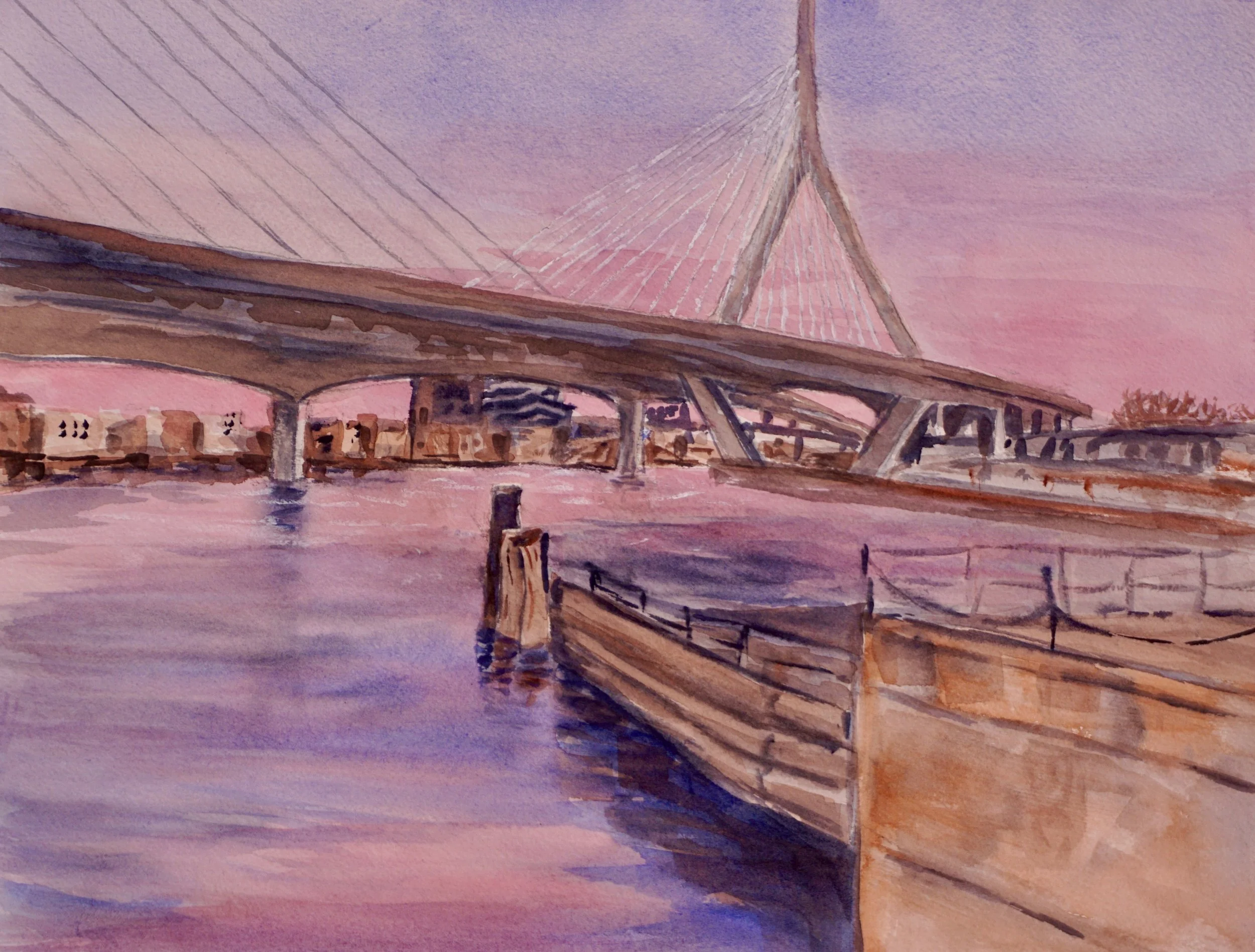
Untitled © 2025 by Sandra Humphries is licensed under CC BY-SA 4.0
What do we lose by seeing ourselves as separate from nature? In my introductory post, I talked about the “human-nature dichotomy” that leads us to draw distinctions between what we build and the natural world. This distinction often breaks down when we probe it, but we rarely take the time to do so. We let it drive our ideas and decisions and actions in the world. The premise of TNWM is to play with and poke at those divisions.
Why does this matter? Let’s start with an example about carbon dioxide.
Carbon is often placed at the center of our climate conundrum. We’ve unearthed and mobilized carbon by extracting and burning carbon-rich fossil fuels, deforesting large areas of land, and engaging in industrial activities like manufacturing. Vast amounts of carbon formerly locked within slower-moving systems have been transferred to the atmosphere, largely as carbon dioxide, which, along with water vapor, methane, and other greenhouse gases, knits together an ever-denser blanket of gases that heats up the planet.
Reducing greenhouse gas emissions from these activities is the most critical action we can take to slow this process. But analyses find that meeting global policy targets for greenhouse gas emissions would require “negative emissions,” which means pulling carbon dioxide out of the atmosphere, not just reducing what we emit. Hence the widespread interest in understanding “carbon sinks,” systems that absorb and trap carbon dioxide in places other than the atmosphere.
On a global scale, natural systems like forests and wetlands represent a huge carbon sink, since plants breathe in carbon dioxide and use it to live and grow, locking carbon into cell walls, roots, stems, trunks, branches, and leaves.
So what about urban environments? The notion of nature as a “carbon sink” has infused urban environmental planning, supporting efforts to plant more trees and create more green space. Carbon sequestration becomes another reason for valuing nature in cities. It lets environmental advocates put nature in the language of urban planning for climate change and public health, which gives it more weight in human decision-making.
I would never argue that we don’t need more vegetation and green spaces in cities, because living beings are so much more than carbon banks. But I’m interested in how dichotomous thinking shapes the way we see the urban world.
Urban areas are a hybrid of built “gray” and natural “green/brown/blue” features. When we view humans as the problem and nature as the solution, it’s easy to look around urban environment and think of gray stuff only as the carbon “source” and natural stuff as the “sink.” But what actually happens to carbon dioxide in urban environments?
It turns out that “gray stuff,” particularly concrete, is interacting with the environment in complex ways. Concrete, for instance, is a mixture of cement (a binding agent made from mined inorganic materials) and sand or gravel. The resulting material is speckled with pinpoint pockets that soak in rain and absorb air. As air defuses into these spaces, it reacts with cement to form new products called carbonates. This process, called carbonation, traps carbon dioxide inside the cement. So concrete sidewalks and buildings are, in their own way, breathing carbon dioxide from the surrounding air.
What does this look like at a larger scale? It depends on how much concrete is around. A 2021 study estimated that buildings in a dense section of Shenyang, China sequester 1,701,600 tons of carbon, equivalent to more than 4% of the city's emissions, at a rate higher than natural carbon sinks of the same size.[1] Another study estimated that globally, cement materials sequestered enough carbon dioxide between the years 1930 and 2013 to offset 43% of the carbon dioxide released into the atmosphere by manufacturing cement over the same period of time. In other words, over large spaces or long periods of time, those porous, cinereous surfaces of sidewalks, bridges, and high-rises help to reshape the urban atmosphere.[2]
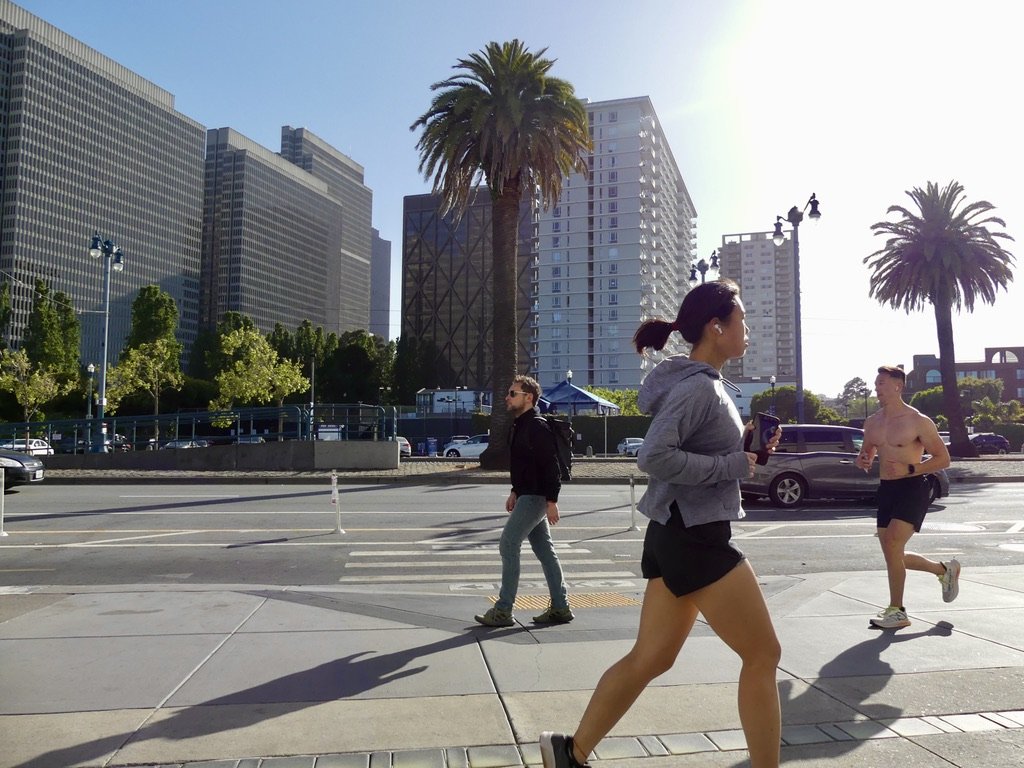

Untitled © 2024 by Courtney Humphries is licensed under CC BY-SA 4.0
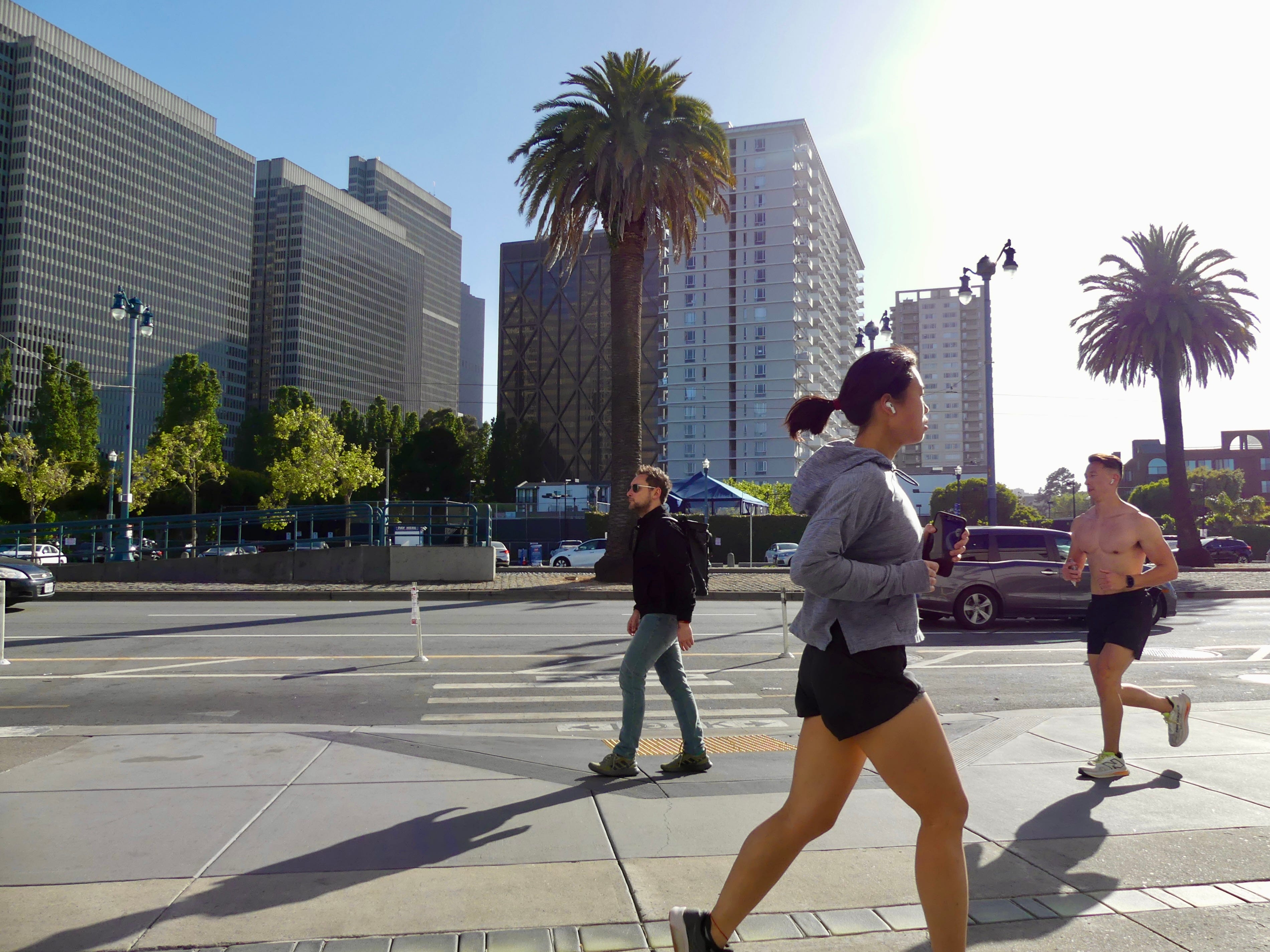
Cement is one of the biggest sources of greenhouse gas emissions globally (fossil fuels are also used to manufacture them), so there’s no environmental case to be made for making more concrete. But studies like these highlight how the built environment is not inert and separate from processes in nature—it is part of the ecological fabric of urban areas.
Carbon-wise, urban greenery is also more complicated than we typically give it credit for. Natural ecosystems also expel carbon dioxide as microbes munch up decomposing plant material in soils, a process called respiration. Research on urban soils in the Boston area where I live found that they tend to release more carbon dioxide than rural soils, in part because people love to rev up soil bacteria by feeding them fertilizer and compost and piling mulch everywhere.[3] Simply calling any urban green space a carbon sink overlooks this complexity. Numerous studies have found that carbon shuffles in and out of landscaped spaces differently depending on what is planted and how it is cared for. A study in Finland found that it can take years for a street tree to turn into a carbon sink rather than a source.[4]
Neither buildings nor urban trees can offset the emissions we make (which is why reducing emissions is critical), but they do matter. How can we manage the processes of manufacturing, building, repairing, demolishing, and rebuilding our infrastructure to enhance carbon sequestration? How can we manage green spaces differently to enhance their ability to store carbon? These questions are actively being researched. Answering them will take a lot of measurement and modeling, but it begins with a leap of imagination.
If we envision a city in which buildings are spewing pollution and trees are sucking it up—the image I see constantly in urban planning—we are seeing only part of reality. The entire urban area is complex and dynamic. This makes planning more challenging, but it also opens up new possibilities for remaking urban areas with connections to the larger environment in mind.

[1] Li, P., Shi, T., Bing, L., Wang, Z., & Xi, F. (2021). Calculation method and model of carbon sequestration by urban buildings: An example from Shenyang. Journal of Cleaner Production, 317, 128450. https://doi.org/10.1016/j.jclepro.2021.128450
[2] Xi, F., Davis, S. J., Ciais, P., Crawford-Brown, D., Guan, D., Pade, C., Shi, T., Syddall, M., Lv, J., Ji, L., Bing, L., Wang, J., Wei, W., Yang, K.-H., Lagerblad, B., Galan, I., Andrade, C., Zhang, Y., & Liu, Z. (2016). Substantial global carbon uptake by cement carbonation. Nature Geoscience, 9(12), 880–883. https://doi.org/10.1038/ngeo2840
[3] Decina, S. M., Hutyra, L. R., Gately, C. K., Getson, J. M., Reinmann, A. B., Short Gianotti, A. G., & Templer, P. H. (2016). Soil respiration contributes substantially to urban carbon fluxes in the greater Boston area. Environmental Pollution, 212, 433–439. https://doi.org/10.1016/j.envpol.2016.01.012
[4] Havu, M., Kulmala, L., Kolari, P., Vesala, T., Riikonen, A., & Järvi, L. (2022). Carbon sequestration potential of street tree plantings in Helsinki. Biogeosciences, 19(8), 2121–2143. https://doi.org/10.5194/bg-19-2121-2022