
“Infrastructure bathing”
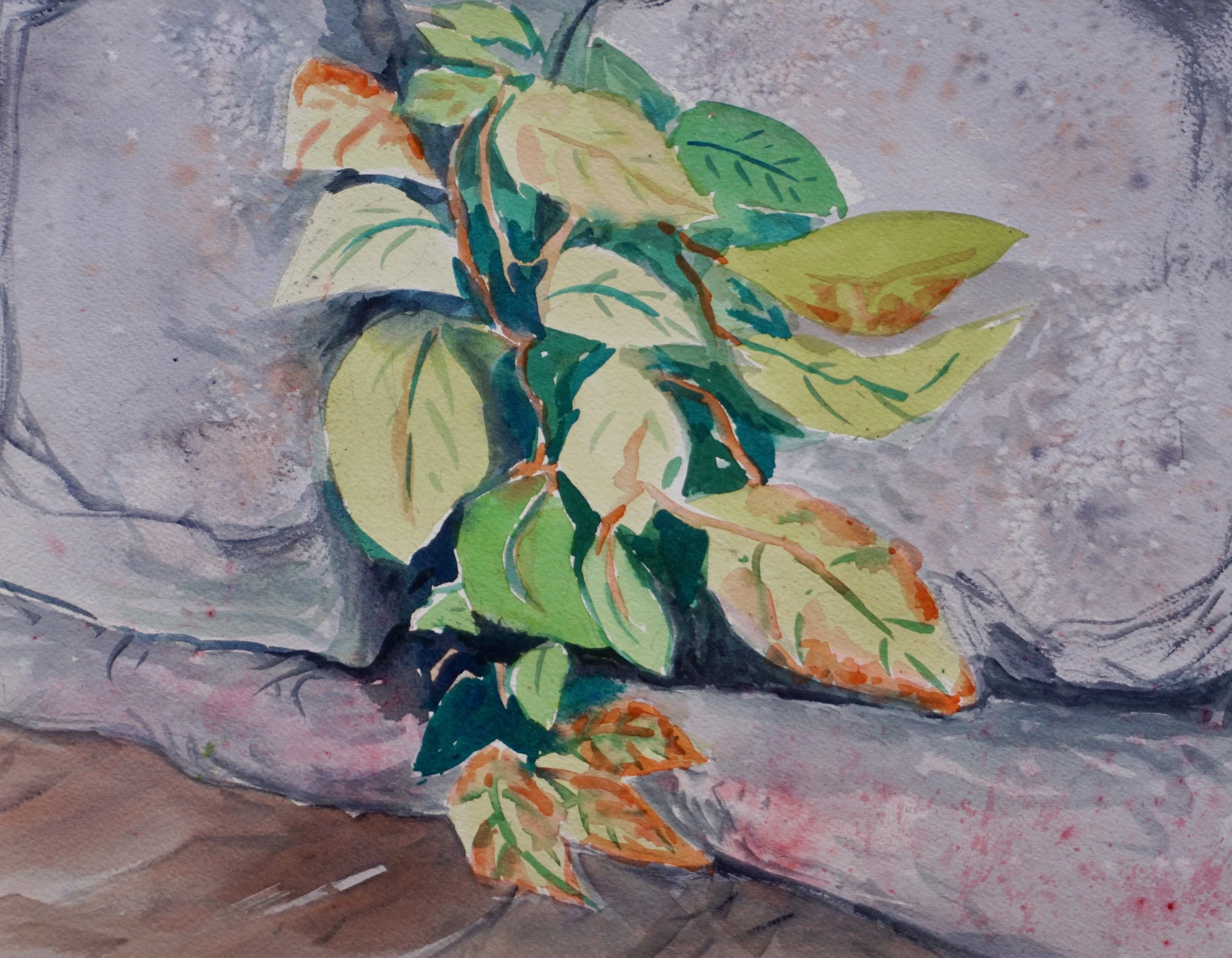
Untitled © 2025 by Sandra Humphries is licensed under CC BY-NC-ND 4.0.
Last April, as the sluggish New England winter finally gave way to spring, I took my first-year students at Boston College out for a quick “forest bath.” For those who haven’t head the term, forest bathing is a thing: it comes from the Japanese practice of shinrin-yoku, in which a therapist guides people as they immerse themselves in a forest, practicing mindful awareness of the sensory details of the environment. To some, it’s simply a trendy term for an old idea, which is that getting out in nature is helpful physically, mentally, and spiritually. Calling it a forest bath puts a new shine on the practice, helping it fit into today’s self-care regimens.
I was inspired by a colleague who had taken a class forest bathing, and I was looking for an excuse to enjoy the warming weather. I planned to walk with the students to a wooded area of campus and spend some time there. But in the end, I crammed too much commentary into our walk (turns out I had lots to say about the draconian landscaping on that pristine campus), and by the time we reached the wooded hill, we only had time for a quick soak before the had to scurry off to their next class.
I told my students to take a few minutes to sit quietly, put away distractions, look carefully at the woods around them, and allow all their senses to take in the environment. And, well….quite a few of them ignored my instruction and chatted on a bench with friends or stared at their phones. But some took it seriously and perhaps felt a moment of connection to nature. If nothing else, they got some fresh air and vitamin D in the middle of a busy day.
One of my goals in this course was to help my students see cities as connected to nature. And doing this exercise got me thinking: Is there an equivalent way to help people feel connected to the built environment? Is it possible to go “infrastructure bathing?” What would that even look like?
At the outset, it seems like a ridiculous idea, given that we are usually surrounded by infrastructure. Heck, we can take a literal bath in our homes anytime.
But while the built environment is always present, we’re often not very aware of it. It’s in the background—it is our background. So how do we strengthen awareness and connection to something that is almost always present? And can doing so help us feel more awake to the reality of our lives?
As I’ve begun to explore this question, I have a few ideas for how to spend a few moments in mindful awareness of our everyday infrastructure, much like forest bathing. I’ll be sharing more of these in future posts. For today, I’ll focus on seeing nature through the built environment. The goal here is to break out of the illusion that our built world is separate from nature by observing all the ways it’s not.
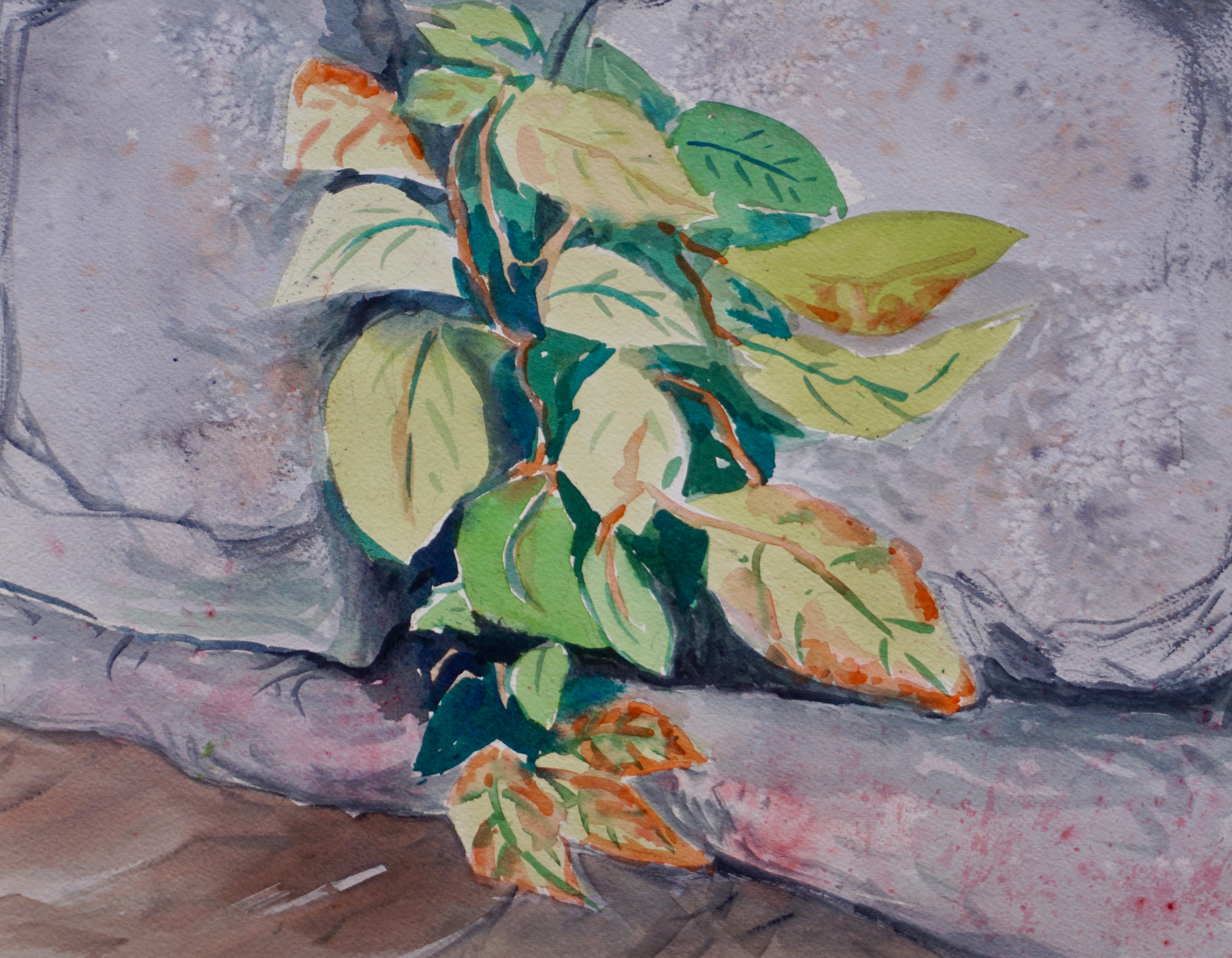
Observing nature at home sometimes means appreciating dust gathering, cobwebs collecting, and wind pushing through drafty doorways in a way we usually don’t. Looking around my house, I see diagonal cracks in the 19th century walls formed when the house settled into earth. When I pour a glass of water, I can stop to remind myself that it’s not appearing in my home from the void like a replicated drink on Star Trek; it has journeyed 60 miles from the forested slopes of the Quabbin Reservoir, through a network of pipes, and into my home. Outside, it’s even easier to find abundant signs of nature in the built world. Old walls are perfect places to see interactions; mortar makes an excellent home for interstitial lichens and mosses, and larger cracks and crags can fill with plants. Walls, like hillsides, even develop different communities on north and south-facing sides. Sidewalk cracks, of course, are prone to being colonized by plants. Signs of nature in the built environment are often seen as an aberration, flaw, or problem that needs fixing. But we can practice seeing them in a more neutral way, with curiosity and interest. What is happening here? How does this work?
Pay attention to how air moves. “The city presents a rough surface to the wind,” wrote Anne Whiston Spirn in The Granite Garden, her classic guide to ecological design that asks designers to become attuned to natural processes in cities. “Building peaks and street canyons, with their abrupt changes in shape, height, and orientation, place a frictional drag on the layers of air closest to the city’s surface, slowing them down.”[1] Whether streets run parallel or against the direction of the wind will cause gusts, eddies, and pools of stagnant air. I think of this every time I find myself around Stuart Street in Boston’s Back Bay, which always feels like a wind tunnel. The buildings here are aligned against with larger air currents flowing over this part of the planet.
Water is another example. A heavy rain is a great teacher; many development disasters might have been avoided by simply paying attention where water travels when it rains. When rain falls or snow melts, notice how fast, how slow, how tortuous is the water’s path, and how it interacts with what is built.
Looking at these natural intrusions in the built environment is admittedly different from being in a forest, where the goal is immersion in nonhuman processes. But when I spend a few moments looking at a weed pushing through an improbably narrow sidewalk crack, I appreciate the resilience and boldness of non-human nature as it takes over places that never asked for it.
What I’m describing is a series of momentary observations….infrastructure dips. Since we’re already physically immersed in the built world, the goal is not to escape to a different place but to find a deep, if brief, mental immersion in awareness in the familiar. When you start paying attention to the everyday processes at play in our world, you begin to step out of the illusion that there are two separate realities: nature and us. It is all real and all connected.
[1] Spirn, Anne Whiston. The Granite Garden : Urban Nature and Human Design / Anne Whiston Spirn. New York: Basic Books, 1984. p. 51.